
Connecticut’s two largest public pension systems had a smaller funding shortfall at the end of June, state officials said Tuesday. Gov. Ned Lamont, Treasurer Erick Russell and Comptroller Sean Scanlon said past extra deposits are projected to lower annual pension funding requirements by nearly $978 million beginning in fiscal 2028, compared with what the state would have needed without those payments.
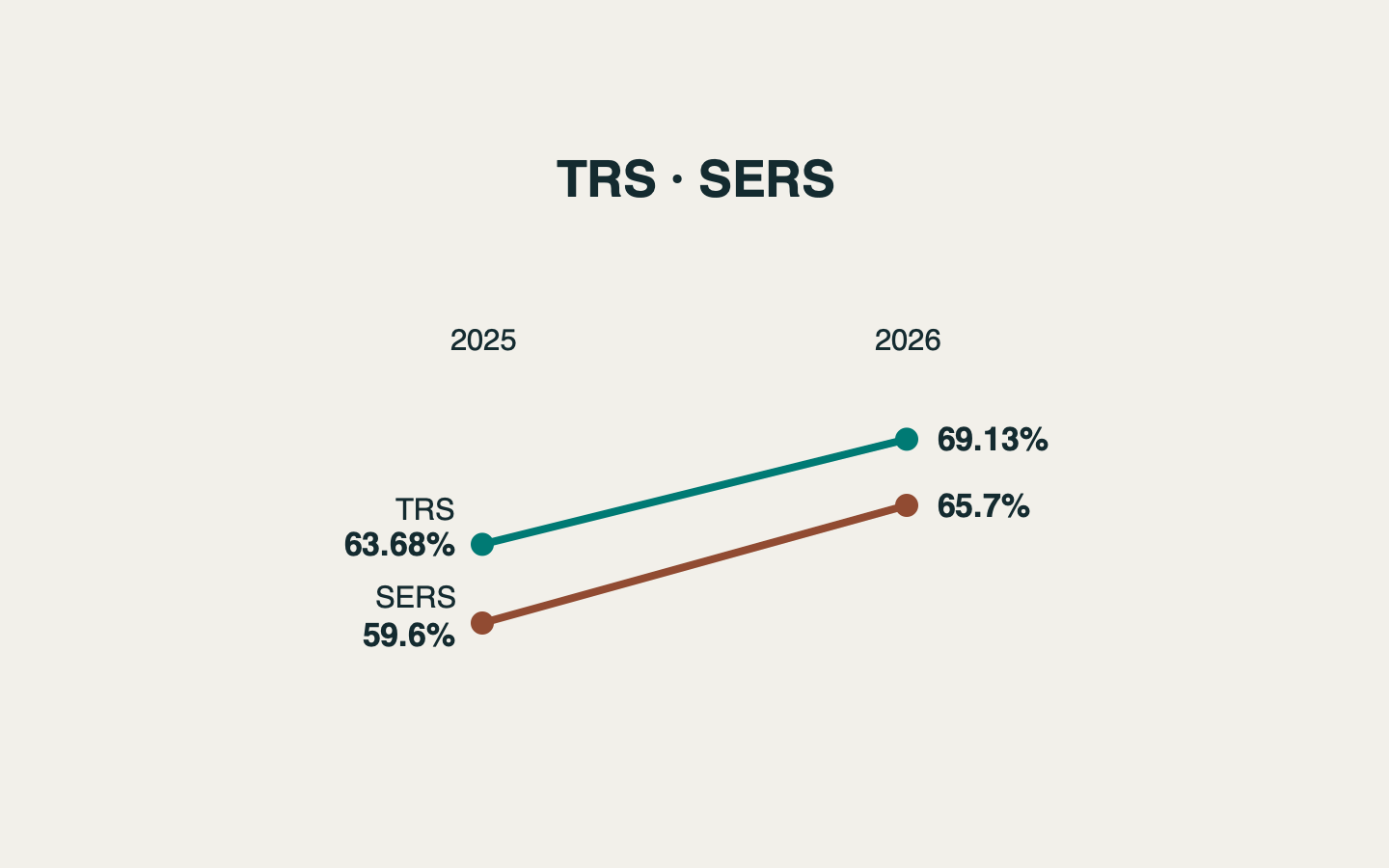
The funded share of the state employees’ plan rose from 59.6% to 65.7%. The teachers’ plan went from 63.68% to 69.13%. The two systems still had about $29 billion in combined unfunded obligations, down about $4.5 billion from a year earlier. The funded ratios compare the actuarial value of plan assets with the estimated cost of benefits already earned.
Strong investment performance and extra state contributions helped narrow the gap. Under Connecticut’s budget rules, certain volatile revenues and year-end surpluses flow to the state’s reserve fund. Once it reaches its statutory limit, excess funds go toward pension debt.
The nearly $978 million estimate measures savings against a scenario without the extra deposits. The state budget office’s November forecast illustrates the distinction. It projects that spending on the two pensions will fall by about $139 million from fiscal 2027 to 2028, while overall General Fund spending will rise by about $1.06 billion. Medicaid and debt service are among the costs projected to rise.
On that forecast, fiscal 2028 General Fund spending would exceed projected revenue by $302 million before applying the state’s revenue cap. The gap grows to about $625 million after the cap, which limits how much projected revenue the state can use. Those estimates describe the cost of continuing current services. The next budget will determine how Connecticut closes the gap.
Office of the Governor · Office of Policy and Management · CT Mirror